You’ve just survived a long-haul flight. You’ve touched down at Cairo International Airport (or maybe Hurghada or Sharm El Sheikh). You are tired, your legs are cramped, and you can practically taste the koshary waiting for you in the city.
There is only one thing standing between you and your vacation: The Egyptian Immigration Line.
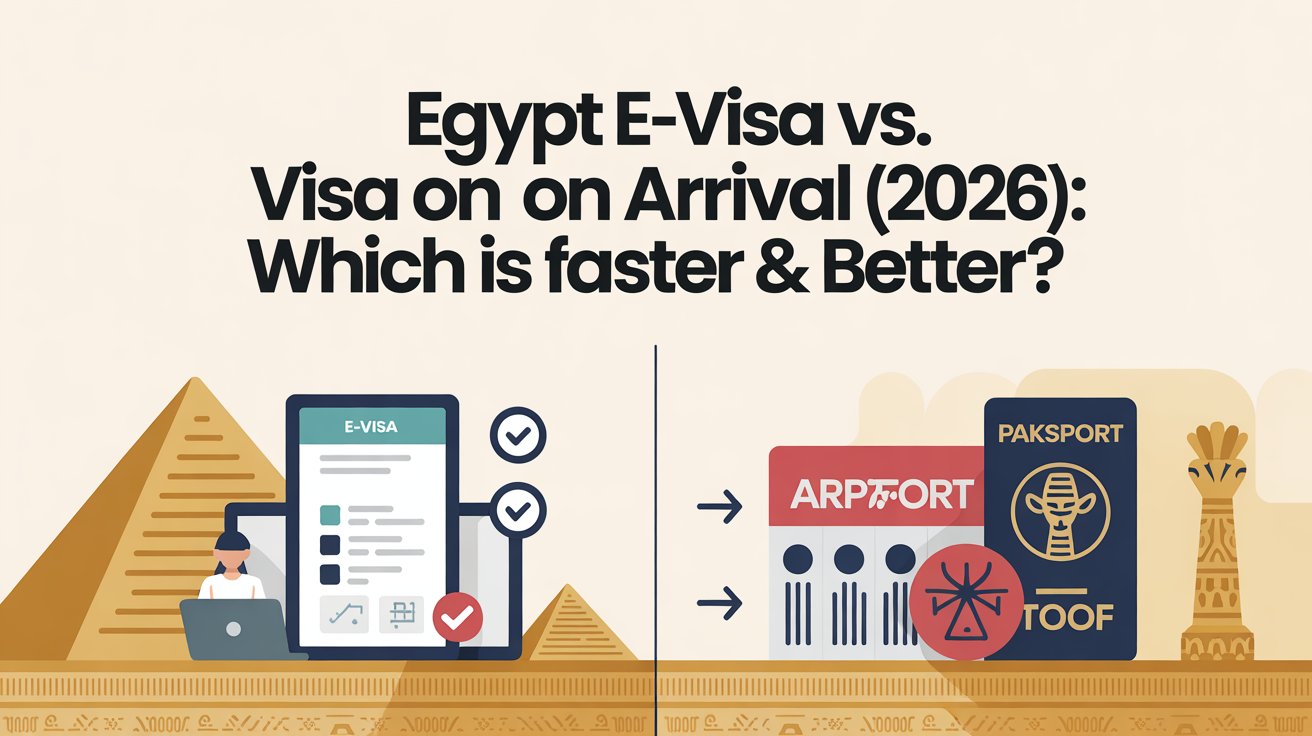
The big question every traveler asks in 2026 is: Should I have applied for the e-Visa online, or is it better to just buy it at the airport?
There is a lot of conflicting advice out there. Some say the online portal is glitchy; others say the airport lines are chaos. As frequent travelers to Egypt, we’re going to break down the pros, cons, and speed of both options so you can choose the path of least resistance.
The Quick Answer (For the Skimmers)
If you are in a rush, here is the verdict for 2026:
-
Fastest Pre-Trip:Visa on Arrival. (Requires zero paperwork before you fly).
-
Fastest at the Airport:e-Visa. (Allows you to bypass the bank kiosk lines and head straight to passport control).
-
Cheapest:Tie. Both officially cost $25 USD for a Single Entry visa.
Option 1: The Egypt e-Visa (The "Planner's" Choice)
The electronic visa system has matured a lot over the last few years. It is designed for travelers who like to have everything sorted before they pack their bags.
How it Works
You fill out a digital form, upload a photo of your passport, pay the fee online, and receive a PDF visa via email. You must print this out and show it to the immigration officer.
If you like the peace of mind of having your "ticket in hand," you can register for your Egypt e-Visa here to get the process started before you fly.
The Pros
-
Skip the Bank Kiosk: This is the biggest speed advantage. At Cairo Airport, "Visa on Arrival" passengers must stand in a line at a bank window to buy a sticker before they get in the immigration line. With an e-Visa, you walk right past the bank and go straight to the passport control queue.
-
Cashless Convenience: You pay online. No need to stress about having crisp, untorn $25 USD bills in your wallet.
-
Security: You know you are approved to enter before you board the plane.
The Cons
-
Strict Requirements: The system is picky. If your passport photo file size is too big or you make a typo on your passport number, the application can be rejected.
-
Processing Time: While many come back in 48 hours, it is recommended to apply at least 7 days in advance.
Option 2: The Visa on Arrival (The "Old School" Choice)
For decades, this was the only way to get in. Despite the digital push in 2026, the "Visa on Arrival" (VoA) is still very popular, especially for unplanned trips.
Who is Eligible?
Not everyone can do this. Citizens of the USA, UK, EU, Canada, Australia, and New Zealand generally can. If you hold a passport from other regions, you may require an e-Visa. Always check your eligibility at e-visa-egypt.com before flying.
How it Works
-
Land at the airport.
-
Before you reach the immigration desks, look for the currency exchange/bank counters (usually National Bank of Egypt or Banque Misr).
-
Hand them $25 USD in cash.
-
They give you a visa sticker.
-
You stick it on a blank page in your passport and then get in the immigration line.
The Pros
-
Total Flexibility: If your trip gets cancelled last minute, you haven't lost any money on visa fees.
-
No Tech Headaches: No fighting with website server errors or resizing JPEGs.
-
Instant: As long as you have the cash, you get the sticker immediately.
The Cons
-
The "Double Queue": You have to wait in two lines (Bank line + Immigration line). If three wide-body jets land at once, this can add 30-45 minutes to your exit time.
-
Cash is King: You must have exact change in USD, Euros, or Pounds Sterling. If your dollar bill has a small tear or mark, they may refuse it.
Head-to-Head: Which is Actually Faster?
Let’s look at two common scenarios travelers face in 2026:
Scenario A: Peak Season (December - February)
During the winter rush, Cairo and Luxor airports are packed. The lines for the bank kiosks can snake around the hall.
-
Winner:The e-Visa. Being able to breeze past the confusion of the bank kiosks and get straight into the passport control lane is a massive relief after a long flight.
Scenario B: The "Tech Struggle"
You are not tech-savvy, or the internet is spotty, and you are flying tomorrow.
-
Winner:Visa on Arrival. Trying to rush an e-Visa application 24 hours before a flight is stressful and risky. It is faster (and safer) to just bring cash and do it manually upon landing.
Crucial Warning: The Taba Border Exception
There is one major exception where "Which is faster?" doesn't matter, because you don't have a choice.
If you are entering Egypt via the Taba land border (crossing from Eilat, Israel), you generally cannot get a full Visa on Arrival. You must arrange your e-Visa in advance to travel outside the immediate Sinai area. If you plan on doing a multi-country trip, make sure you register online well ahead of time.
Expert Tips for a Smooth Arrival
Regardless of which method you choose, follow these three rules to survive Egyptian immigration:
-
Print Your e-Visa: Even though it is 2026 and everything is digital, Egyptian officers love paper. Do not rely on showing the PDF on your phone.
-
Bring a Pen: You may still need to fill out a landing card (depending on the airport's current digitization status). Having a pen saves you from begging strangers for one.
-
Use the Right Address: On your application or landing card, you must list where you are staying. If you are on a Nile Cruise, list the name of the ship.
Conclusion: Which One Should You Pick?
If you want a stress-free arrival and hate waiting in unnecessary lines, get the e-Visa. It is the modern, efficient choice for 2026 travel.
If you are a spontaneous traveler or hate filling out online forms, the Visa on Arrival works just fine—just don't forget your $25 cash!
Ready to secure your trip?
To avoid the bank queues and start your vacation sooner, we recommend you visit e-visa-egypt.com to check your requirements or register directly here to get your approval sorted today.